Stem Cell Therapy
2nd life utilizes Mesenchymal stem Cell (MSC), Car T Cell, Natural Killer Cell (NK Cell) to treat incurable diseases.
Bone Marrow Transplantation
2nd life performs autologous and allogeneic (including haploid and unmatched) to treat thalassemia, AML, Fankoni anemia, AML,
Research
2nd life is actively preforming various research in clinical trial to unravel unmet medical needs such as Scleroderma, osteoporosis,MS
What is Stem Cell?
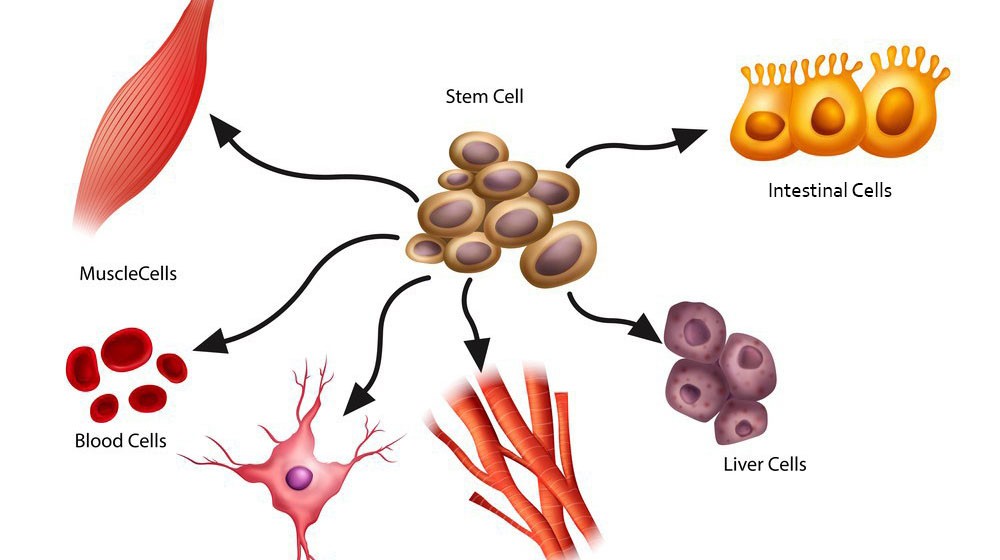
Stem cells are the body's raw materials. Stem cells are special human cells that are able to develop into many different cell types , These cells can perform specialized functions. Stem cells can divide themselves to produce similar cell with same properties.Stem cells can mature and change into specific functioning cells such as heart muscle cells, nerves, skin, brain etc.
What is stem cell therapy?
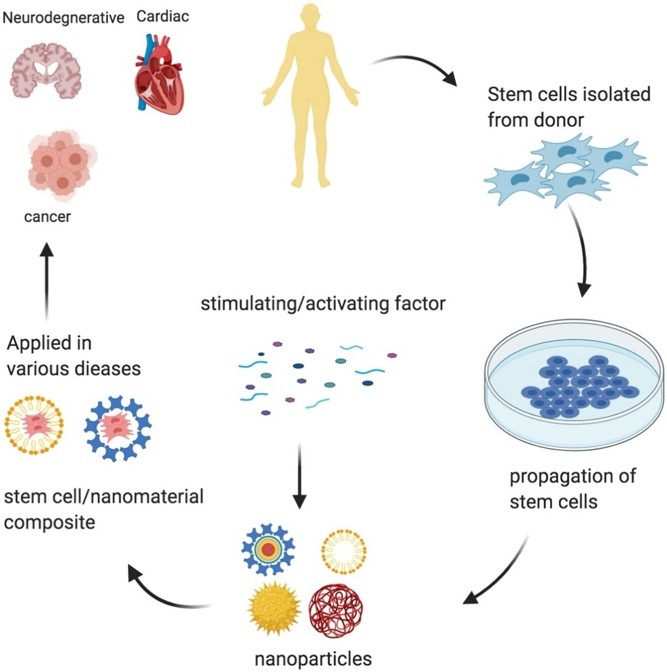
Cell therapy seeks to replace tissue or organs that have been damaged by disease, trauma, or congenital issues, vs. the current clinical strategy that focuses primarily on treating the symptoms. Human body uses stem cells as one way to way of repairing itself
• Where can stem cell be collected from?
Blood, Fat, Bone Marrow Cord Blood
• What are types of stem cell?
Hematopoietic stem cells (HSCs)
Mesenchymal Stem Cells (MSCs)
Neural Stem Cells (NSCs)
Human Embryonic Stem Cells (hESCs)
Induced Pluripotent Stem Cells (iPSCs)
What diseases can be improved through stem cell therapy?
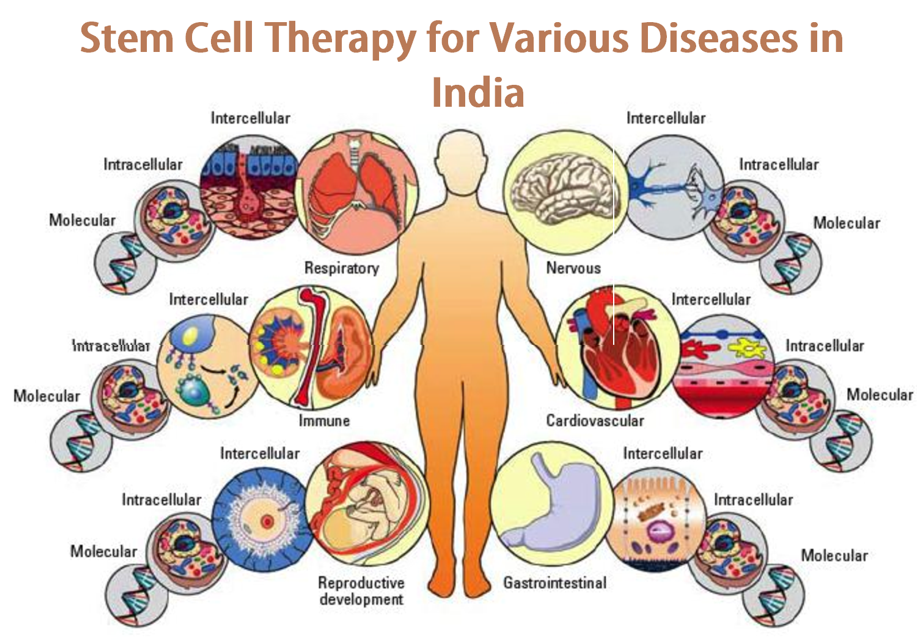
Stem cell therapy can be applied for many diseases. While this cell therapy has shown significant improvement in the conditions of various conditions, considerable amount of research is still being performed to discover additional break throughs in this filed. Here are a few conditions that are being treated utilizing stem cell therapy. MS, Parkinson, Diabetes, osteoporosis, Scleroderma, AML
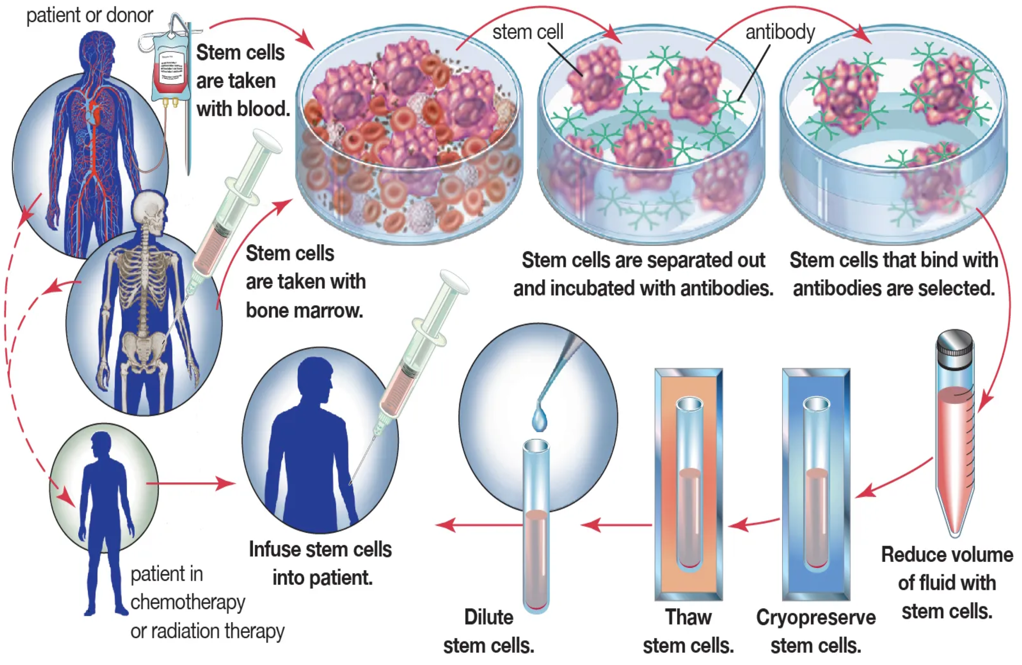
Bone Marrow transplantation (BMT)
• What is BMT?
A bone marrow transplant is a procedure that infuses healthy blood-forming stem cells into your body to replace bone marrow that's not producing enough healthy blood cells.
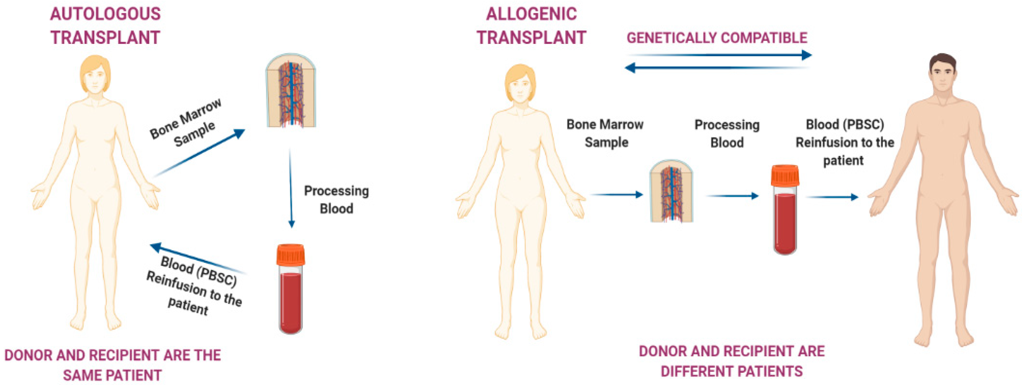
Bone marrow transplants may use cells from your own body (autologous transplant) or from a donor (allogeneic transplant).
What are different types of Bone Marrow Transplantation?
• Autologous bone marrow transplant. The donor is the patient himself or herself.
• Allogeneic bone marrow transplant. Bone marrow is take from genetic matched donor usually a brother of siter. Other donors for allogeneic bone marrow transplants may include the following:
• A parent. A haploid-identical match is when the donor is a parent and the genetic match is at least half identical to the recipient.
• Unrelated bone marrow transplants The genetically matched marrow or stem cells are from an unrelated donor. Unrelated donors are found through national bone marrow registries.
• Umbilical cord blood transplant. Stem cells are taken from an umbilical cord immediately after delivery of an infant. transplant.
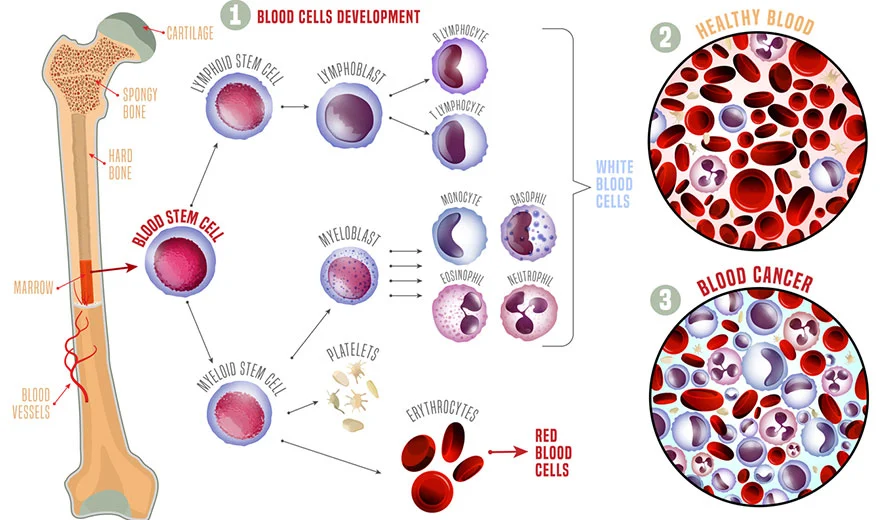
What diseases can be cured by Bone Marrow Transplantation ?
Malignant (cancerous) disorders:
• Acute Leukemia
• Chronic Leukemia
• germ cell tumors
• lymphoma
• multiple myeloma
• myelodysplastic syndromes
• myeloproliferative neoplasms
Non-malignant diseases:
• aplastic anemia
• bone marrow failure syndromes
• haemoglobinopathies including severe sickle cell disease • multiple sclerosis
• Immune Deficiencies